
GATHERING
THE SABBATH
WHAT IS IT?
Passover (Hebrew Pesach “to pass over, pass by”) is the first of the seven annual appointed times.
Leviticus 23:4–5
These are the appointed feasts of YHWH, the holy convocations, which you shall proclaim at the time appointed for them. In the first month, on the fourteenth day of the month at twilight, is YHWH’s Passover.
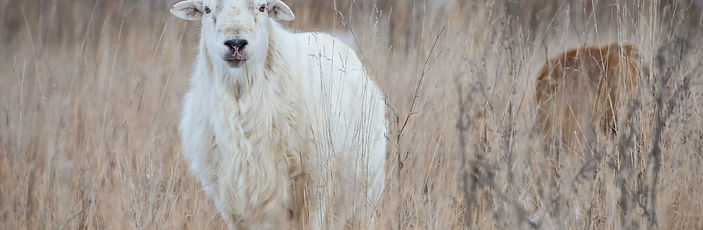
Nearly 3500 years ago YHWH delivered His people from bondage as slaves in Egypt through the blood of a sacrificial Passover lamb. He asked His people to celebrate that day every year, throughout all generations. 1500 years later, on that very same day, Yeshua sacrificed His life to deliver us from the bondage of sin as the perfect Passover Lamb. The plan of Salvation, prepared by the Father since creation, would be set into action on this very day. It was foreshadowed by what happened in Egypt some 3500 years ago. Today, just as then, Passover is day we want to remember!
Most of us know that Passover remembers the last plague of Egypt, when the Father sent the Destroyer to kill the firstborn of the whole land, except for the households of the people of Israel. The Destroyer was to pass over all their households, IF AND ONLY IF they sprinkled the blood of the sacrificed lamb on their doorposts. And then the Father said to his people, I want you to always remember what I did for you on this day. So for 3500 years, the Passover has been celebrated. Why? Because that’s what the Father asked His people to do:
Exodus 12:3-6
Tell all the congregation of Israel that on the tenth day of this month every man shall take a lamb… Your lamb shall be without blemish… and you shall keep it until the fourteenth day of this month, when the whole assembly of the congregation of Israel shall kill their lambs at twilight.
Exodus 12:7–8
Then they shall take some of the blood and put it on the two doorposts and the lintel of the houses in which they eat it. They shall eat the flesh that night, roasted on the fire; with unleavened bread and bitter herbs they shall eat it.
Exodus 12:12–14
For I will pass through the land of Egypt that night, and I will strike all the firstborn in the land of Egypt, both man and beast; and on all the gods of Egypt I will execute judgments: I am YHWH. The blood shall be a sign for you, on the houses where you are. And when I see the blood, I will pass over you, and no plague will befall you to destroy you, when I strike the land of Egypt. “This day shall be for you a memorial day, and you shall keep it as a feast to YHWH; throughout your generations, as a statute forever.
The sacrifice - blood of the lamb - saved them from death. And the Father brought them out of Egypt and gave them a new beginning in the promised land. That happened on the day Scripture calls Passover.
Every year faithful followers of YHWH would celebrate this special day, just as the Father instructed them to do. About 1500 years after this first Passover in Egypt, on the very same day, Yeshua told his disciples to prepare for the Passover meal.
Matthew 26:18–19
He said, “Go into the city to a certain man and say to him, ‘The Teacher says, My [appointed] time is at hand. I will keep the Passover at your house with my disciples.’ ” And the disciples did as Yeshua had directed them, and they prepared the Passover.
They would have eaten lamb, with unleavened bread, and would have had wine to drink. This is what we call “the last supper”, since it was the final meal Yeshua would eat before he arrested and then crucified. It was at this Passover meal that Yeshua shared the bread and wine with his disciples:
Luke 22:19–20
And he took bread, and when he had given thanks, he broke it and gave it to them, saying, “This is my body, which is given for you. Do this in remembrance of me.” And likewise the cup after they had eaten, saying, “This cup that is poured out for you is the new covenant in my blood.
Just hours later, still on the day of Passover, Yeshua, the Lamb of God, would be crucified to become the perfect and complete sacrifice for our sins.
Luke 23:44–47
It was now about the sixth hour, and there was darkness over the whole land until the ninth hour, while the sun’s light failed. And the curtain of the temple was torn in two. Then Jesus, calling out with a loud voice, said, “Father, into your hands I commit my spirit!” And having said this he breathed his last. Now when the centurion saw what had taken place, he praised God, saying, “Certainly this man was innocent!”
Yeshua celebrated Passover with his disciples in the evening that began Passover, just as the people of Israel did some 1500 years earlier. And before the day was over, He was killed, becoming the Passover Lamb. Just as Israel was saved from physical death by the blood of the Passover lamb, so it is that all believers (past, present and future) are saved from eternal death by the blood of Yeshua, THE Passover Lamb.
ADDITIONAL INFORMATION
When is Passover?
Scripture says that Passover is on the 14th day of the first month of the year. The first month is Abib, or alternatively, Nisan. So while we it is clear that Passover is on Abib 14, what is not so clear is when the Passover meal is really to be eaten. Part of the problem is that in the Hebrew calendar a new day begins with the evening. So sometimes when Scripture refers to the evening of a certain day, it is not clear if it is the evening that begins that day or the evening that finishes that day.
There is a lot debate and confusion over the question of whether to eat Passover meal in the evening that begins Passover or in the evening at the end of Passover. In fact, traditional Judaism currently celebrates the Passover meal in the evening following Abib 14 (which is actually the beginning of Abib 15, and therefore not even on Passover day). Based on Scripture, I believe the strongest argument can be made for eating Passover in the evening that begins Abib 14.
The main problem in understanding when to celebrate stems from the fact that we don’t clearly understand the meaning of the Hebrew words translated as “twilight” in our English Scriptures:
Leviticus 23:5
In the first month, on the fourteenth day of the month at twilight, is the YHWH’s Passover.
The word translated as “twilight” is in Hebrew ben ha’arbayim literally meaning “between the two evenings.” Each verse of the Hebrew Scriptures that refers to the time of Passover uses this same exact phrase “between the two evenings” on the fourteenth day of the first month (see Ex 12:6, Lev 23:5, Num 9:3, Num 9:5, and Num 9:11). Most people think this phrase means twilight, but others think that it may refer to the period between late afternoon and twilight; still others that it means the midpoint between noon and sunset.
To get a better understanding of what this phrase means, it is helpful to look at the other instances where it is used. In addition to the verses surrounding the time of Passover, the phrase “between the two evenings” is used when the people of Israel were complaining of being hungry and YHWH promised them quail:
Exodus 16:12–13
“I have heard the grumbling of the people of Israel. Say to them, ‘At twilight [literally, between the two evenings] you shall eat meat, and in the morning you shall be filled with bread. Then you shall know that I am the Lord your God.’ ” In the evening quail came up and covered the camp, and in the morning dew lay around the camp.
YHWH promised they would be eating meat “between the two evenings”, and then he sent the quail in the “evening”. So “between the two evenings” must either occur after “evening”, or least it must include “evening”, since they quail had to arrive prior to the people eating them. This account, however, does not really add more clarity to the period time referred to by “between the two evenings”. In fact it points to even more ambiguity, since we really don’t know for sure what time of day “evening” refers to in Biblical Hebrew. It is not uncommon for languages to use a single term that encompasses mid-to-late afternoon as well as early evening. So if the Hebrew for “evening” itself is unclear in meaning, how much more so is the term “between the two evenings”.
Perhaps the one passage of Scripture that provides the most help in understanding the meaning of the phrase is the following:
Exodus 30:7–8
And Aaron shall burn fragrant incense on it. Every morning when he dresses the lamps he shall burn it, and when Aaron sets up the lamps at twilight[literally, between the two evenings], he shall burn it, a regular incense offering before YHWH throughout your generations.
Here we see that Aaron sets (or lights) the lamps the Holy Place of the Tabernacle “between the two evenings”. It makes most sense for this to be done at twilight, after the sun is set but before it became dark.
If we assume that the most probable meaning of “between the two evenings” is twilight, it is still not clear from Leviticus 23:5 (or Num 9:3-5) whether the Passover passages refer to the twilight at the beginning of Abib 14, or at the end of Abib 14 (which would be just before the beginning of Abib 15). To clarify this, it is helpful to look at the original Passover in Exodus.
The Exodus passage states the lambs are to be killed “between the two evenings” on the Abib 14, which seem to indicate around twilight at the beginning of Abib 14:
Exodus 12:6–8
and you shall keep it until the fourteenth day of this month, when the whole assembly of the congregation of Israel shall kill their lambs at twilight [literally, between the two evenings]. “Then they shall take some of the blood and put it on the two doorposts and the lintel of the houses in which they eat it. They shall eat the flesh that night, roasted on the fire; with unleavened bread and bitter herbs they shall eat it.
This passage also indicates that the meat was to be eaten “that night, roasted on the fire”. So it seems that in the original Passover, the lambs were killed around twilight at the very beginning of Abib 14. They were immediately roasted on the fire, and eaten later that very night.
One would assume that the day of Passover would be the day of the actual Passover meal as well as the day that the messenger of death “passed over” the people in Egypt. We know from Scripture that the meal was eaten at “night”. Later that same night the messenger of death “passed over”. So it seems logical that the Passover meal was to be eaten at the beginning of Passover. Just after sunset as Abib 14 was beginning (that is at twilight, “between the evenings”) the lamb was slain. It was roasted and eaten a couple hours later. And then around midnight, the messenger of death passed over. All these events would have taken place on Passover, Abib 14.
The Exodus account is in complete harmony with “New Testament” Scriptures, where it seems evident that Yeshua ate the Passover meal with his disciples at the beginning of Abib 14, and then as crucified later on Abib 14, becoming the Passover Lamb for us all.
So in summary, even though there is some uncertainty as to the exact meaning of “between the two evenings”, it seems that both the Exodus Passover meal and the Passover meal of Yeshua and his disciples in the Gospel accounts took place in the evening beginning Abib 14. That would have been Wednesday evening, according to the timeline suggested above for the Passover associated with the crucifixion of Yeshua.
A more in-depth article discussing the Timing of Passover, Unleavened Bread, and Firstfruits are available for download.
HOW TO CELEBRATE
This is YHWH’s day for us to remember the Father’s physical deliverance of His people from slavery in Egypt as well as what that foreshadowed -- the spiritual deliverance of His people through the death of our Messiah.
There are many traditions involving Passover, both Jewish and Christian. Not all traditions are bad. In fact some can be very helpful. But we should know what is Scripture and what is tradition. And we should be careful to avoid traditions that have their roots in pagan rituals and beliefs. A good example of that is the use of eggs, which are symbols of fertility, that have crept into Jewish Passover traditions as well as other popular Christian traditions.
For many of the Appointed Times, Scriptures instruct us to hold a “holy gathering” and to not do any “ordinary work”, like a Sabbath. However, Passover is not one of these days. We are not instructed to rest on Passover, nor are we instructed to have a “holy gathering on this day”. We certainly may, but Scripture does not instruct us to do so.
Scripture says we are kill a lamb and eat it with our family, along with unleavened bread:
Deuteronomy 16:1–3
“Observe the month of Abib and keep the Passover to the Lordyour God, for in the month of Abib YHWH your God brought you out of Egypt by night. And you shall offer the Passover sacrifice to YHWH your God, from the flock or the herd, at the place that YHWH will choose, to make his name dwell there. You shall eat no unleavened bread (lit. “yeasted food”) with it.
Although the ESV and other translations say “unleavened bread”, the Hebrew word is “chametz” which means “anything leavened, or any yeasted food”.
Since there is no temple, we can no longer make sacrifices, but we can still celebrate Passover by eating lamb, unleavened bread, and nothing yeasted or leavened. By the time of Yeshua’s day, there were clear traditions in place, and it seems the traditional cups of wine and bread dipped in herbs was already practiced. It can fun and meaningful to do that as well.
We make this evening a festive occasion, with a beautifully set table, candles, and a wonderful meal, the centerpiece of which is a roast leg of lamb. We also try and celebrate it much like Yeshua and His disciples would have. The entire meal is combination of Scripture readings and explanations which explain the history and meaning of Passover as well as some of the traditions of celebration that perhaps Yeshua and His disciples would have observed.
We often print out a booklet for each participant, with an outline of the evening and all the verses and blessings that we will be using. That is available for you to use or modify, along with my teaching notes which are slightly expanded from the participant booklet.